

The structural research topics currently underway in our research group generated significant interest at the Expo. Crystals, in-situ crystallization, and molecular models were presented. They drew attention to the single-crystal growth and structural research project, successfully carried out on board the International Space Station (ISS) in 2025 by the invitation of the Space Applications Services, and coordination of the Japan Manned Space Systems, took place in the frame of the HUNOR program.
HUN-REN’s eight institutions involved in space research were represented by four researchers from the Research Centre for Natural Sciences, from the Research Centre for Astronomy and Earth Sciences, the Institute for Nuclear Research, as well as the Research Institute of Earth Physics and Space Science. The researchers presented their projects and introduced HUN-REN, as well as the results and potential of Hungarian space research, to the international attendees. The presence of the representatives from the HUN-REN and the HUNOR programs, as well as the Hungarian astronauts, Tibor Kapu and Gyula Cserényi, generated sustained interest in the Hungarian space research program.
The Space-Comm Expo is Europe’s largest space industry show. The Expo showcases the latest scientific achievements, technological developments, products, and services. Representatives from universities, research institutes, national space programs, and companies — both established and those looking to break into the field — from all over the world participate in the event.
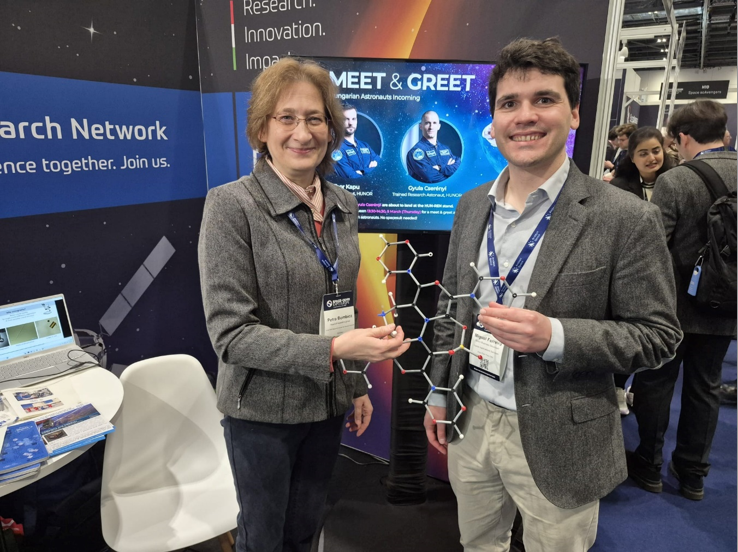
Participating in the Expo provided an opportunity for face-to-face meetings: Petra Bombicz and Miguel Ferreira from Space Applications Systems, who invited the researchers of the Chemical Crystallography Research Laboratory to develop a method for microgravity crystallization of organic materials, for which SpaceApps and JAMSS provided the technical environment on the International Space Station.